
We often say that a failed part doesn’t mean a failed window. What we don’t always explain is how we actually figure out which part failed, and why that process matters as much as the repair itself.
It usually starts with a conversation, not a truck pulling into the driveway. A description of what’s happening, sometimes paired with a photo, tells us more than people expect. A door that won’t latch cleanly points somewhere different than a door that drags along the floor. A window that’s hard to lift points somewhere different than one that lets in a draft even when it’s shut. The symptom is the starting point, not the diagnosis itself.
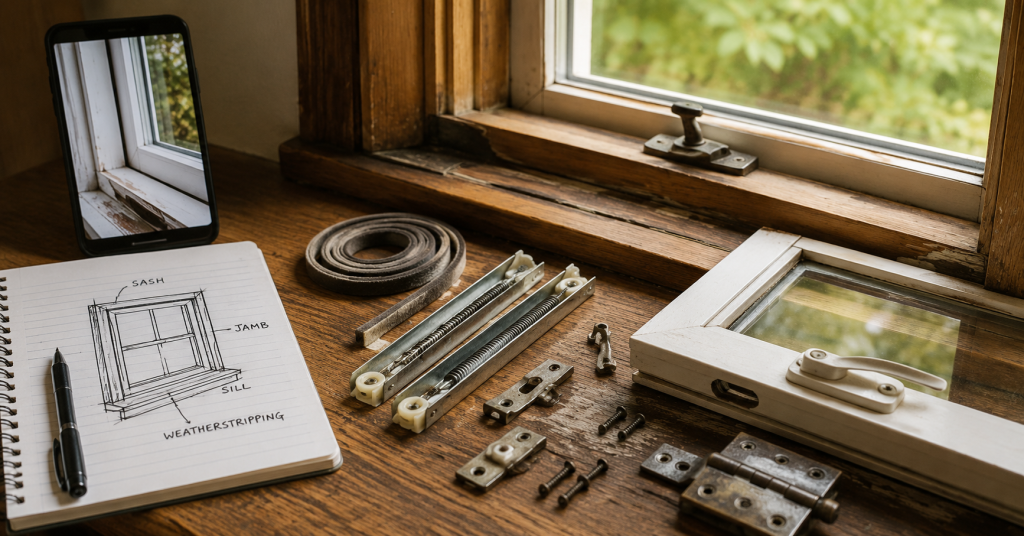
From there, the process is about isolating which specific component is responsible. A window or door is really a collection of parts working together: the sash, which holds the glass and moves within the frame. The jamb, the vertical sides of the frame itself. The sill, the horizontal piece at the bottom. The weatherstripping, hardware, balances, and tracks that let everything move the way it’s supposed to. When one of those parts wears out, shifts, or fails, the whole unit can feel like the problem, even when it’s just one piece doing its job poorly.
That distinction changes the recommendation. A worn balance means a specific, inexpensive repair. A failed seal between panes of glass usually means replacing the sealed glass unit, not the whole window. A frame that’s genuinely rotted or shifted out of square is a different conversation, because at that point the structure itself, not a component, is what’s failed.
Once we know what’s actually causing the problem, the next step is straightforward: a clear, part-by-part list of what needs attention and what each item costs. Nothing bundled, nothing assumed. A homeowner can choose to address one item or all of them, based on budget and priority, without wondering whether they’re paying for more than the situation actually calls for.
Good diagnosis takes a little more time up front. It also tends to save homeowners from paying for a bigger fix than they needed, which is the whole point.