
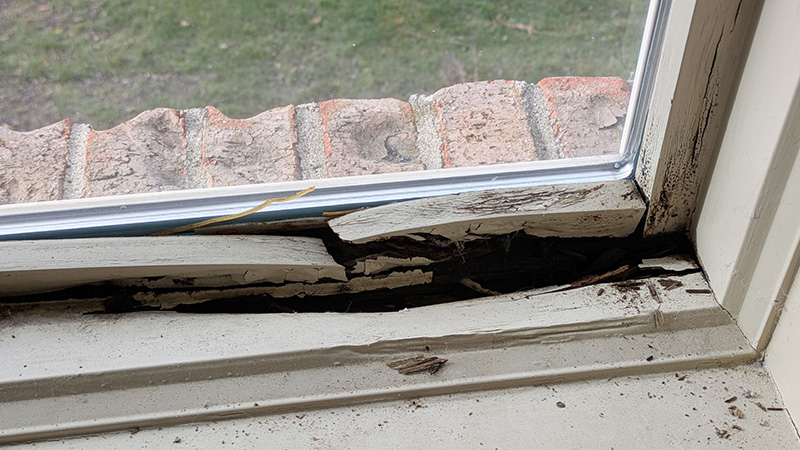
Few things make a homeowner assume the worst faster than pressing a finger against a window sill and feeling it give. Soft, crumbly wood looks like a verdict on the whole window. Often it isn’t, and the real question is how far the damage goes.
Rot needs two things: wood, and moisture that stays put. On a window, the moisture collects in a few predictable places. The bottom of the sash, the sill where water sits after rain, the corners where joints have opened up, and the edges of the glass where old glazing has cracked or pulled away. That’s why a window can look fine from across the room and still have a soft spot you only find by touching it.
Where the water came from matters as much as the damage itself. A gutter that overflows onto the trim, caulk that has shrunk away from the frame, and glazing that no longer seals the glass all send water to the same few spots. If the wood gets fixed and the source gets left alone, the rot comes back.
You can get a rough read yourself with a screwdriver. Press the tip into the wood at the soft spot and work outward. Sound wood pushes back. Rotted wood lets the tip sink in easily and comes away in crumbs. Note where the solid wood starts. A soft area a few inches wide in one corner of a sill or along the bottom of a sash is a very different situation from soft wood running the full length of a frame.
That boundary decides most of these jobs. When the damage is confined and the rest of the sash, frame, and glass are sound, the bad section can usually be repaired and the window stays. When the rot has run through the structure, or spread into the framing around the window, the conversation changes, because there is nothing solid left to build the repair from.
This comes up often in older homes, and it’s one reason original wood windows deserve a closer look before anyone writes them off. A wood window can be repaired a piece at a time.
Late fall is a good time to check, since the wet months are when hidden damage gets worse. Press a screwdriver into the bottom of your sashes and the sills, look at the caulk and the glazing, and notice where your gutters empty. If you find a soft spot, take a photo and send it our way with a short description. That is often enough for us to tell whether it’s a small repair or a bigger conversation.